


Even though this story eventually led me to the University of Mississippi, my relationship with being a small girl with big feelings began years before I knew what the campus even looked like. Growing up in the Mississippi Delta, I struggled with being so deeply connected to my feelings. It never really took much to activate the water works, and I shortly learned that I was definitely a cryer. The world seemed to be much harsher than what I believed I had the capacity for, and it definitely didn’t help that I was surrounded by a culture that praised being “strong” and “tough.” My feelings made me feel like too much, and my size and soft-spoken voice often made me feel like a walking target. So much so that by the time I transitioned to college, I unconsciously began to swallow my feelings and put on a brave face.
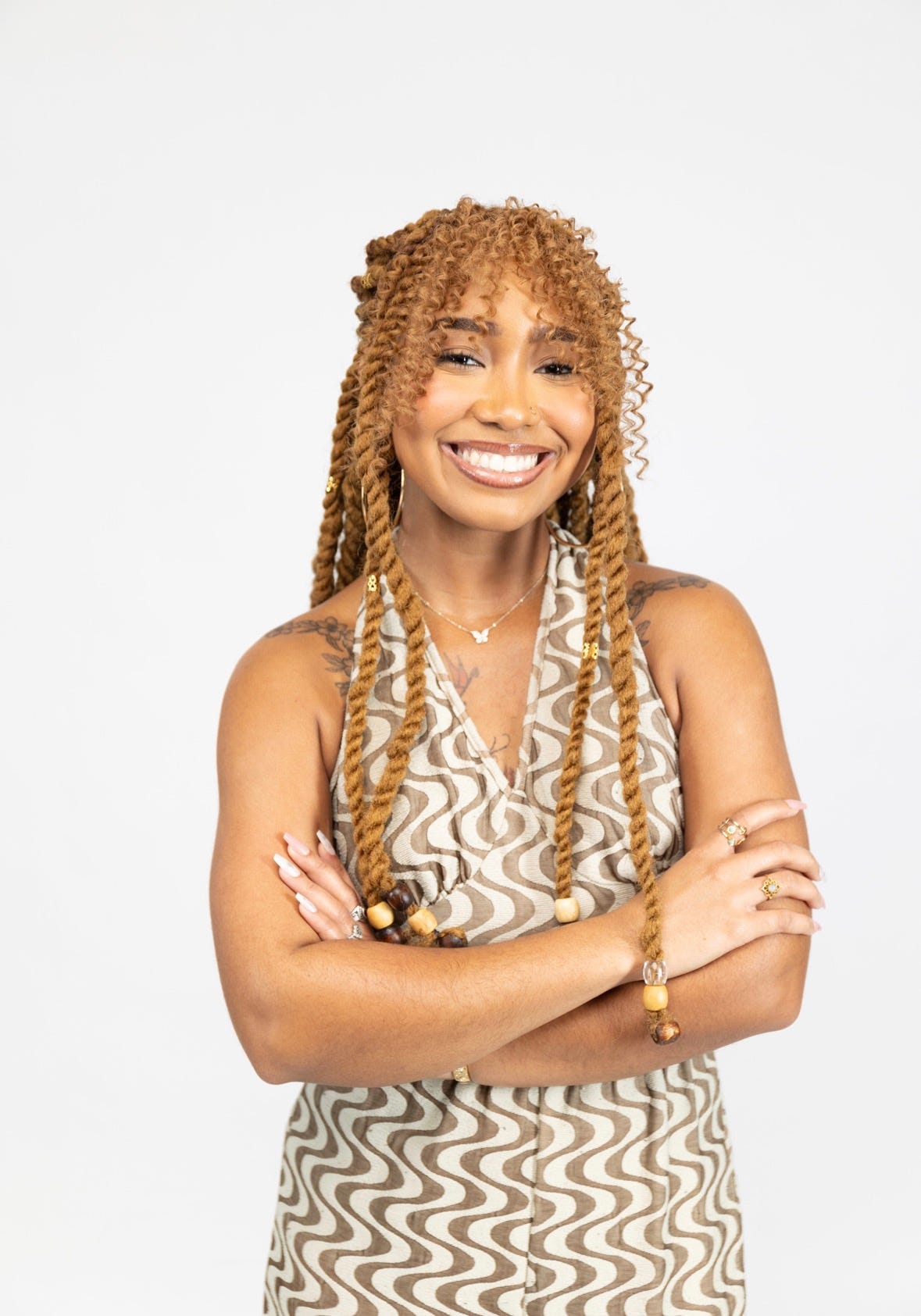
By the time I entered freshman year, I had perfected my mask. I tried to make friends, but I trusted them like my grandmother gave me candy when I was a child. Little by little, piece by piece, and in fractions small enough for me to check the temperature afterwards. Past friendships and interactions left me guarded, and my parents’ lessons of “not needing friends because you have siblings” rang loudly in my ears. The closest people typically got to me was enough to read my resume, and occasionally laugh at a joke. The shell I had hand-molded to fit around my skin, keeping me safe from the world, was the same barrier that kept me from connecting with others.
So as I stumbled over myself trying to navigate a space that seemed to fit me like a shoe two sizes too small, I began to question what friendship and community meant to me and what itcould look like.
I remember the first time I heard the song Big Feelings by Willow Smith. The song was released during my senior year of college. A time when I was deep in my feelings, as I struggled to navigate my last year on a predominantly white campus as the Black Student Union President during Trump’s second presidency term. My emotions were finally tired of always coming in last place.
Between all that was going on in my romantic, personal, academic, and advocacy life, I felt like my life was too much for me to keep up with. If I were playing UNO, my hand would’ve made it a hard game to win. To top it all off, I had no idea what I would be doing after I walked across the stage. The fear of returning home with no options left me constantly searching for something to grasp onto, but my current campus life left me exasperated. I found myself deeply overwhelmed, and my usual coping mechanism of isolation only made things worse.
Throughout college, I was used to wearing different hats to align with all of my different interests. The fashion organization for self-expression, the campus newspaper as a writing outlet, and the Black Student Union as a place to try and cultivate community and pour into Black students to help them see their potential and leadership capacity. I even had off-campus endeavors for when I needed a breather from campus. The garden community, my work as a dialogue facilitator, back in the Mississippi Delta.
While these spaces poured into certain parts of myself and my interests, the part that needed the most nurturing, I left untended and ignored. Unless I was on my therapist’s comfy couch or on an occasional coffee date with a friend, how I felt took a backseat as I constantly told myself that I just needed to make it to the finish line. Even when asked how I felt, my mouth could never form the words. My days became an endless series of marking off responsibilities and checklists as a way to fill a hole that constantly felt bare and open. I had perfected the strong friend role. One that I didn’t realize was a true detriment to myself and the relationships I had with people around me. Once I finally had company, the last thing I wanted to discuss was the worries that filled my mind when I was alone, and so I found myself in a cycle of drowning in my thoughts.
I didn’t realize how bad it was until I finally called and asked for help. As I sat in my two-bed apartment room with my iPhone 15 clutched in my right hand, tears streamed down my face as I debated who I should reach out to.
My best friend… naw, I don’t want to be a burden. I know that they have a lot going on.
My soul sister… naw I know that they are currently dealing with advocacy work and classes.
Eventually, I landed on my father’s name. Curled in a ball on the floor, I waited while the dial tone rang until I eventually heard his voice. My mouth twitched as I formed the words to communicate how in trouble I felt. It is hard to express a feeling of hopelessness when, in other people’s eyes, you are doing just fine. Hell, better than fine. I was a high-achieving student leader with an extensive resume. There isn’t anything I could have to complain about. There were people much worse off. But all I knew was that breathing suddenly felt like the hardest thing to do, and I found myself thinking of all the things I needed to get done. Not because I was behind on anything. I was actually completely caught up on everything. It was to find something to feel in control of. As I forced out as many words as I could, I immediately heard what I always would hear when I tried to express how I felt.
That at least I didn’t have his problems or anyone around him’s problems. That I was stressing for absolutely nothing, and I should go to church because that’s the problem. I needed Jesus. That was the problem. Not that I had been pushed into getting out of therapy because, according to the therapist, I was “just fine” and didn’t need it. Not that I had spent four years in survival mode (hell, 22 years), and it was finally catching up to me.
So after hanging up the phone, I sat there on the floor. I curled into a ball, struggling to process how my attempt at asking for help was turned into a lecture on how I should just be grateful. In that moment, I finally realized that I had ignored my emotions because everyone else always had. Regardless of how I felt, the problem was always still going to be there, and I would be expected to solve it. It’s hard to treat your feelings like they matter when they never seem to be treated like they do when it’s mentioned. Ironically, it dawned on me that I never had a problem with asking for help. I grappled with the complete rejection of my emotions after I expressed them. I feared what to do once I put myself out there, and I was left with the emotions I tried to share and the new ones from feeling completely unseen and misunderstood.
Rather than being rejected, I chose the option of keeping how I felt to myself as I thought in private to figure out what it all meant. I wasn’t fully seeing myself as a human since I wasn’t often given the space to be, and because of that, even the expectation others had of me was to operate as a superhuman. At that point, I felt like all I could do was pick myself off the floor as I always had, and keep going.
***
Once I walked across the stage and secured a job a month and a half later, all of the emotions that were bottled inside poured out. As I started my first big girl job, the financial stability I never had removed the floodwall I had built to hold the emotions I didn’t know how to handle, and it cracked more each day. My mind replayed the past five years of my life, and I seethed. When I wasn’t angry, I was vanquished. Between my senior year of high school (which is a whole nother story for another day) and the last four years, I was anguished. Even though I went to college and did the damn thing (your girl earned EACH credit of that degree and EVERY tassel around her neck), what pained me the most was how emotionally neglected and unseen I felt both by myself and others. Whenever I tried to express how I felt, my resume was used as the primary piece of evidence that I was being delusional and should just smile.
Somewhere between now (May 2026) and when I graduated (May 2025), I finally realized that I was waiting for confirmation that I would never receive from anyone other than me. I was waiting for other people to validate my experiences and emotions, and they would never be able to do that. But it was time for me to start validating myself, making space for myself, allowing myself to be seen and heard. Somewhere along the way, I allowed other people’s dismissal of my feelings to block me from listening to myself. I started to believe that maybe I was “just tripping” and that everyone else’s feelings were more valid than my own.
When I graduated from college, one of my favorite professors sent me a message. It read, “Never forget who you are, or others will mold you to their liking. Check in with ‘you.’ You’re a brand! You are Bre’Anna Coleman!” I was so busy focusing on everything other than who I am and who I’ve become. I was hoping that I could be seen and feel seen without realizing that I had to do it first. If others did after, good, and if they didn’t, great.
Taking it a step further, I realized that I hadn’t been seeing myself fully, which was what was causing the disconnect in my conversations with others. When I looked in the mirror, I would still see that small, timid little girl who always hoped that no one would call her name.
The little girl with the big feelings who lacked the vocabulary and courage to share. I didn’t see a headstrong twenty-three-year-old woman who constantly chose herself even in the most difficult instances and always found solutions to her problems. The only thing that was left for me to do was realize who I am, make space, and learn how to take up that space.
This generation has had the opportunity to work on and towards generational healing in a way that our mothers, grandmothers, and great-grandmothers didn’t. After reflecting on my conversation with my dad, I realized that I couldn’t blame him for his advice. After all, he was sharing what he saw as the best course of action. Now that I am in early adulthood, I’m learning that the parables and stories never meant harm, and gratitude is extremely important. But making space for your emotions and how you feel is just as important. I realized that the disconnect between other generations and my own is that we are making steps towards self-healing, which sounds foreign to them because they didn’t have the luxury. Two things can be true at once. You can be blessed and still be overwhelmed. You can solve a problem and still make space for your feelings to run through you because a large part of being human is being able to feel.
At the end of 2025, I was in a program that led me to Philadelphia, and I shared a room with a strong-minded and powerful activist whose spirit I admired. After a long, late-night conversation, she expressed that she wished I spoke more freely. “You have so much to share.” It made the Director of the Office of National Scholarships’ words during my last visit ring louder in my mind. “You have a lot to say. Let yourself be heard.” And I thought before I closed my eyes to go to sleep, “Maybe they’re right. You do have a right to take up space, and you have a right to feel. Just learn to allow things to run through you rather than sit and fester in you.”
****
If this story moved you in any way, please let the author know. Connect with Bre'Anna and/or send love offerings to her.
